A Java developer designs, builds, and maintains software systems written in Java, usually focused on backend logic, data processing, and integration between systems rather than what the user sees on screen. In most UK businesses, that means keeping existing systems running smoothly and extending them safely, not building new applications from a blank page.
If you are hiring your first Java developer, or trying to brief a recruiter properly, it helps to know exactly what this person will spend their time doing once they join your team, what tools they will need, and how to tell whether the work they produce is actually good.
Core Responsibilities
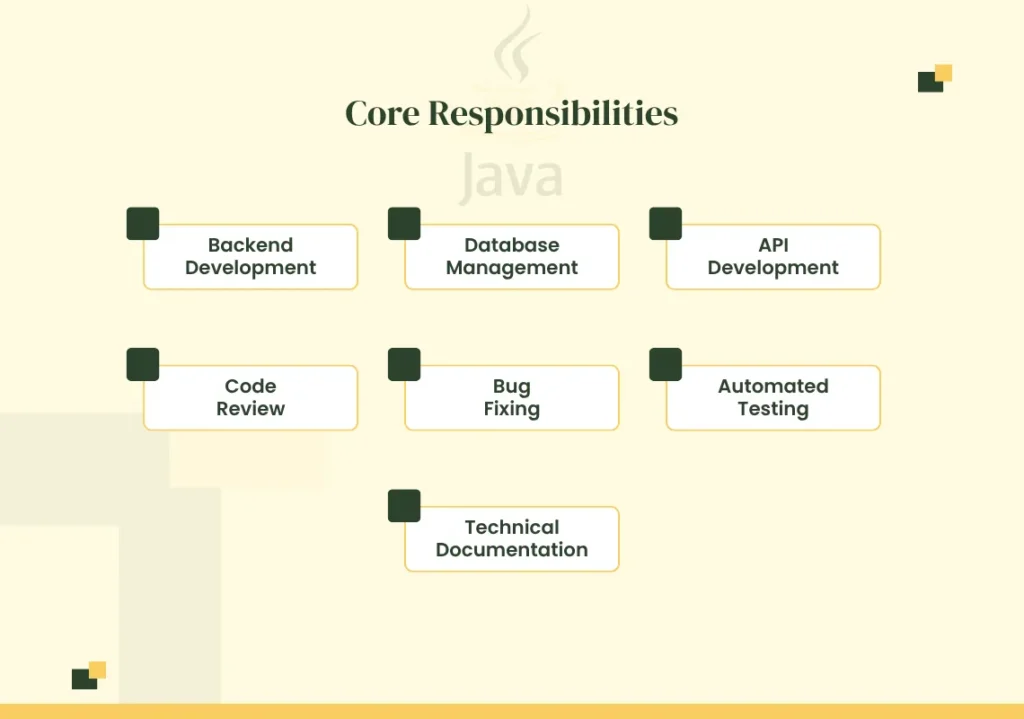
A Java developer’s day-to-day work usually includes:
- Writing and maintaining backend code, typically using Spring or Spring Boot
- Designing and querying databases, often through Hibernate or a similar tool
- Building and maintaining APIs that connect your systems to other software
- Reviewing other developers’ code and getting their own code reviewed
- Testing code before it goes live, including writing automated tests
- Fixing bugs in systems that are already running in production
- Documenting changes so the next developer, including a future hire, can understand the system
Most of that list is maintenance and integration work, not building something new. UK businesses that already run Java, whether in banking, insurance, logistics, or e-commerce, need someone who can work safely inside a system that already exists and already matters to the business. A Java developer who understands this is usually a stronger hire than one who only wants to build new features from scratch.
Where Java Developers Typically Sit in a UK Business
Java developers most often sit inside a wider engineering or IT team, working alongside other backend developers, a QA or testing function, and sometimes a dedicated DevOps role that manages deployment. In a smaller UK business, a Java developer may be the only backend specialist on the team, working directly with a product owner or founder rather than a large engineering department. Either way, the role tends to sit closer to the data and business logic layer of the business, rather than the customer-facing side.
A Day in the Life, By Seniority
What a Java developer actually does changes a lot depending on their experience level. Knowing this helps you set the right expectations for whoever you hire.
Junior Java Developer
A junior developer typically works on clearly defined tickets handed to them by a senior developer or team lead. They spend a lot of time reading existing code to understand it, fixing smaller bugs, and writing tests. Their changes are usually reviewed closely before anything reaches production, and they are not expected to make architectural decisions on their own.
Mid-Level Java Developer
A mid-level developer owns features from start to finish. They can take a requirement, design a reasonable approach, write the code, test it, and get it into production with less oversight. They start making real decisions about how a piece of the system should work, though bigger changes still go through review with someone more senior.
Senior Java Developer
A senior developer spends less time writing routine code and more time on system design, reviewing other people’s work, and catching problems before they reach production. They are usually the person who decides how a new feature should fit into the existing system, and they carry more responsibility for the codebase staying maintainable as the team and the system grow.
If you are hiring your first Java developer for a small business, you are most likely hiring at the mid-level, someone capable enough to work independently but not yet carrying full system-design responsibility. Hiring a junior alone, with no senior oversight available, often means slower progress and a higher risk of mistakes reaching production.
Tools and Technologies They Use Day to Day
Knowing the tools a Java developer works with tells you a lot about what onboarding will look like. Most UK Java roles involve:
- Spring or Spring Boot, the standard framework for building Java backend applications
- Hibernate, for working with databases without writing raw SQL for every query
- Maven or Gradle, for managing dependencies and building the project
- Git, for version control and collaborating with other developers
- Jira or a similar tool, for tracking tickets and project work
- A CI/CD pipeline, for testing and deploying code automatically
If your business does not already have these tools set up, factor that into your hiring timeline. A Java developer can help you set them up, but it is worth knowing this is part of the job before they start, since early weeks may go toward infrastructure rather than visible features.
What Good Output Looks Like
Many first-time hiring managers judge a Java developer’s work by one question: does the code run? That is not enough. Code that runs is not the same as code that is safe to leave in production.
Good output from a Java developer includes tests that check the code does what it is supposed to do, clear documentation or comments explaining non-obvious decisions, a code review from another developer before it goes live, and a clean commit history that shows what changed and why. A developer who consistently skips these steps might ship features faster in the short term, but the system becomes harder and more expensive to maintain over time, and the cost usually shows up months later as more bugs and slower changes.
If you are not technical yourself, ask whoever manages the Java developer to confirm these steps are happening, rather than judging the work purely on whether features appear to work. A short weekly check-in on testing coverage and outstanding code reviews is a simple way to keep this visible without needing to read code yourself.
Java Developer vs. Full-Stack Developer
A Java developer focuses on the backend: the logic, data, and systems that run behind the scenes. A full-stack developer works across both frontend and backend, building the interface a user sees as well as the logic behind it.
If your business needs someone to maintain or extend an existing Java system, a dedicated Java developer is usually the better fit, since they can go deeper into backend-specific tools like Spring Boot and Hibernate than a full-stack developer typically will. If you are building a smaller product from scratch and need one person to handle both the interface and the backend, a full-stack developer may suit you better.
Trying to use a full-stack developer to maintain a complex, established Java system, or a Java specialist to build a small product’s entire interface, often means paying for depth in the wrong place. If you are also weighing Java against another backend language entirely, our comparison of java vs python backend development covers that decision in more depth.
Where to Hire a Java Developer in the UK
Once you know what the role actually involves, the next step is deciding how to bring someone on. UK businesses usually choose between recruiting in-house or hiring a dedicated developer through a staffing partner.
Teambuild places pre-vetted, dedicated Java developers with UK businesses on a flat monthly retainer, part-time or full-time. Your developer works as part of your team on the responsibilities covered above, while Teambuild handles payroll, onboarding, and admin in the background, so you are not left managing recruitment, contracts, and compliance on top of the actual work.
For the full hiring process, see our guide on how to hire a java developer, or go straight to hire a java developer if you are ready to bring someone on.
FAQ
What does a Java developer do on a daily basis?
A Java developer spends most of their time writing and maintaining backend code, reviewing other developers’ work, testing changes, and fixing issues in systems that are already running, rather than building new applications from scratch.
Is a Java developer the same as a software engineer?
Not exactly. Software engineer is a broader title that can cover many languages and roles. A Java developer is a specific type of software engineer who works primarily in Java, usually on backend systems.
What’s the difference between a Java developer and a full-stack developer?
A Java developer focuses on backend systems built in Java. A full-stack developer works across both frontend and backend, often using several different languages and frameworks.
How much does it cost to hire a Java developer?
UK Java developer salaries and full hiring costs, including the option of a dedicated hire through Teambuild, are covered in detail on our cost to hire a java developer page.