
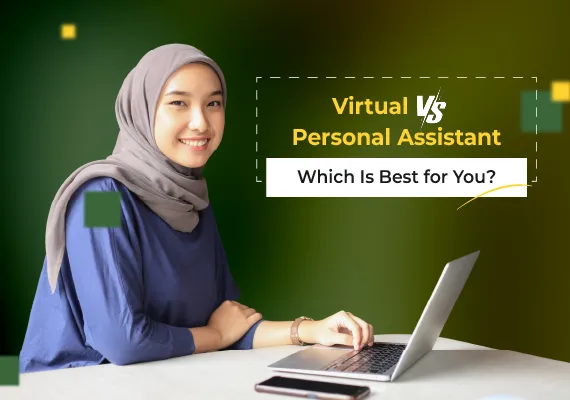
Time is the currency of modern leadership. The choice for a senior executive, entrepreneur, or business owner isn’t whether to get support; it’s deciding which kind of support creates the most value.
Two roles dominate this conversation: the Personal Assistant (PA) and the Virtual Executive Assistant (VEA). Both are assistants, but their tasks, responsibilities, and impact can be worlds apart. Understanding the differences between a personal assistant, executive assistant, and virtual executive assistant is crucial if you want to hire strategically.
Defining the Roles: Personal Assistant vs Virtual Executive Assistant
Personal Assistant (PA)
A personal assistant is an in-person professional who supports one executive with administrative and personal tasks. They typically:
- Manage daily tasks like diaries, travel, meetings, and correspondence.
- Handle personal errands and personal affairs, including shopping, family schedules, and household coordination.
- Provide personal support that blends professional and private life.
Essentially, a personal assistant provides administrative and personal support in the office (and sometimes beyond). They are embedded in your daily environment and focus on personal and professional organisation.
Virtual Executive Assistant (VEA)
A virtual executive assistant is a remote assistant who delivers more business-focused support. They are often trained to operate like executive assistants but work online. Their skill set usually includes:
- Strategic planning support: preparing board materials, creating reports, and handling complex calendars.
- Project management: tracking deliverables, liaising with team members, and coordinating business operations.
- Administrative support at scale: inbox triage, scheduling across time zones, CRM updates, and data entry.
- Digital-first services: managing online systems, cloud filing, social media management, and light business ops.
While a PA blends personal and administrative tasks, a virtual executive assistant is a professional focused on supporting executives at a strategic, operational, and administrative level without being physically present.
Executive Virtual Assistant vs Personal Assistant: Key Differences
| Category | Personal Assistant (PA) | Virtual Executive Assistant (VEA) |
| Location | In-office or hybrid, physically present | Remote, anywhere with internet |
| Focus | Personal errands, personal lives, daily admin | Executive-level support, strategic planning, business operations |
| Tasks | Diary, travel, personal errands, confidential personal affairs | Project management, admin duties, team coordination, administrative tasks |
| Skill Set | Strong time management, discretion, handling personal schedules | Strategic planning, digital tools, managing team members, supporting senior executives |
| Cost model | Salaried employee (with overheads: NI, pension, office space) | Flexible (hourly packages, subscription models) |
| Best suited for | Executives who need personal assistance | Executives who need higher-level administrative support without hiring in-office |
Tasks and Responsibilities: What’s the Difference?
Personal Assistant Works Best For:
- Personal errands like booking restaurants, gift shopping, managing personal affairs.
- Daily tasks: diary management, travel, correspondence.
- Administrative duties requiring physical presence: filing, paper management, meeting prep.
- Personal assistance that touches both professional and personal lives.
Virtual Executive Assistant Is Better Suited For:
- Administrative tasks: managing inboxes, scheduling, travel logistics.
- Project management: coordinating tasks among team members, following up on deliverables.
- Strategic planning: preparing meeting packs, supporting goal tracking.
- Business operations: CRM management, research, vendor liaison, data entry.
- Digital work: social media management, cloud systems, virtual event support.
Similarities Between Personal Assistants and Virtual Executive Assistants
Despite their differences, assistants and virtual assistants share some similarities:
- Both assistants focus on removing time-draining tasks like scheduling, data entry, and administrative support.
- Both allow executives to need less help with daily admin and more with decision-making.
- Both require a high level of trust, discretion, and professional communication.
In short, the similarities between personal and virtual assistants stem from their ability to free the executives they support so they can focus on high-value priorities.
Which Kind of Assistant Is Right for You?
Hire a Personal Assistant if:
- You need personal and confidential errands handled in person.
- Your personal and professional lives are intertwined (e.g., family logistics + board prep).
- You value a physical presence for day-to-day assistance.
Hire a Virtual Executive Assistant if:
- You need administrative support at scale without hiring full-time.
- You want help with strategic planning, project management, and business operations.
- You prefer flexibility: hiring a virtual executive assistant for only the needed hours.
Costs and ROI: Personal Assistant vs Virtual Executive Assistant
The differences between the costs of hiring a traditional Personal Assistant (PA) and a Virtual Executive Assistant (VEA) are clear.
Personal Assistant Costs
In the UK, personal assistants typically earn £30k–£40k+ per year, not including the additional overheads of employment such as National Insurance, pension contributions, office space, and equipment. This makes a PA a significant fixed cost for many startups and SMEs.
Virtual Executive Assistant Costs with Teambuild Consultancy
At Teambuild Consultancy, we’ve designed a more flexible and affordable way to access high-quality executive support:
- Part-time Package – £500/month
- Your Virtual Executive Assistant works 4 hours a day, 5 days a week, on a schedule that aligns with your needs. Perfect for startups or executives who need consistent but not full-day coverage.
- Full-time Package – £900/month
- Your Virtual Executive Assistant works 8 hours daily, 5 days a week, fully tailored to the client’s preferred working hours. This option provides the same coverage as a traditional in-office assistant but at a fraction of the cost.
ROI Considerations
With Teambuild Consultancy, the break-even point is dramatically lower than hiring a salaried PA. For many clients, this means:
- Predictable monthly costs with no hidden overhead.
- Scalable support: start part-time and upgrade to full-time as your business grows.
- Global flexibility: your assistant works in the time zone that suits you.
This makes hiring a Virtual Executive Assistant through TeamBuild Consultancy an ideal solution for startups, scale-ups, and senior executives who need the expertise of an executive assistant but don’t want the full-time cost burden of an in-office hire.
The Strategic Value: Executive Assistants vs Personal Assistants
The role of an executive assistant, virtual or in-person, involves higher-level strategic planning and project management. They often require a higher level of education and skill set than PAs.
By contrast, personal assistants usually work more closely on personal schedules, personal errands, and administrative and personal support. Both roles are critical, but the assistant is crucial in different ways.
What’s the Difference Between a PA and a Virtual Executive Assistant?
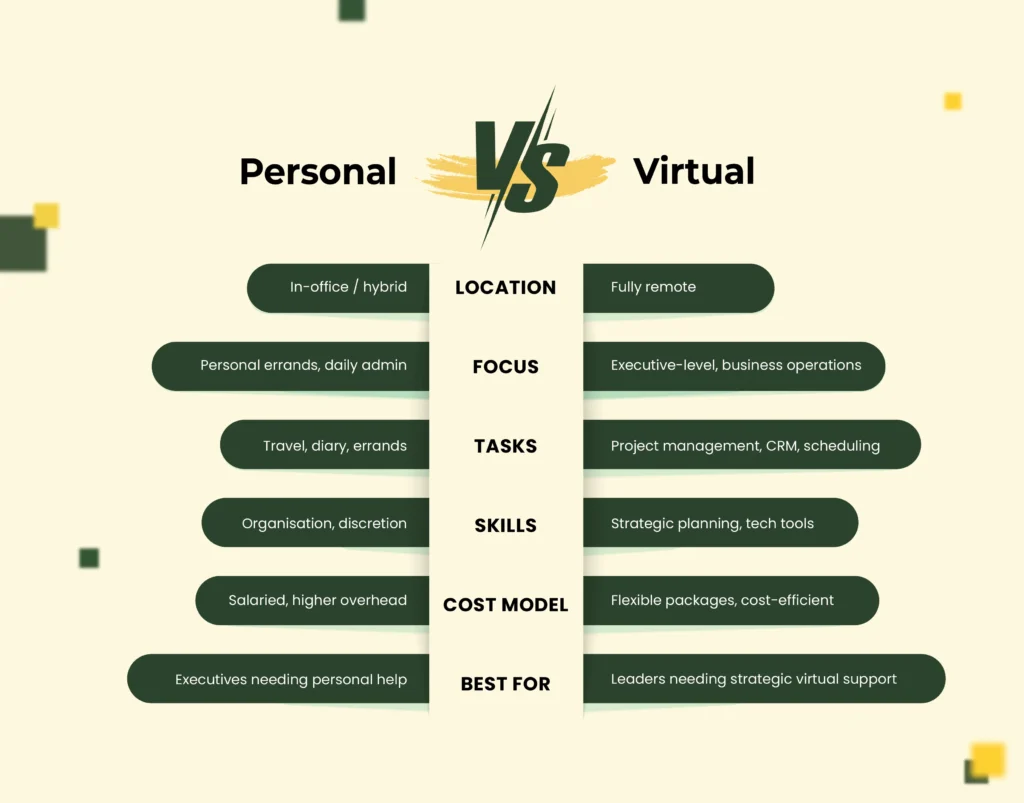
If you’re still wondering what the difference is between a PA and a VEA, here’s the simplest way to put it:
- A personal assistant is right if your priorities involve managing personal tasks and personal errands alongside daily admin.
- A virtual executive assistant is right if your focus is on executive-level administrative tasks, strategic planning, and business operations support delivered flexibly and remotely.
Assistant Is the Best Investment, But Choose Wisely
Personal and virtual executive assistants are professionals who transform how you use your time.
- A personal assistant works best if you need hands-on help with personal affairs and personal support.
- A virtual executive assistant is best if you need strategic planning, project management, and administrative support without full-time overhead.
The real takeaway? An assistant is crucial, but the type of assistant you hire should reflect your needs.
So ask yourself: Do you need someone in your personal life, or someone in your business life? The answer determines whether a personal or virtual executive assistant is right for you.