
The UK logistics sector is entering a decisive period. Rising operational costs, persistent labour shortages, and increasing regulatory complexity are forcing businesses to rethink how they run their supply chains. Traditional approaches that rely on expanding in-house teams are no longer sustainable, especially for small and mid-sized logistics companies.
In response, many UK businesses are turning to a new operating model that blends human expertise with modern digital tools. At the centre of this shift is the logistics virtual assistant, a role that has evolved far beyond basic administrative support. In 2026, logistics virtual assistants are becoming a strategic asset for companies that want to stay efficient, compliant, and competitive.
At Teambuild Consultancy, we work closely with logistics businesses across the UK to help them hire skilled full-time and part-time virtual assistants. What we consistently see is that companies adopting this model are not just saving costs but are also building more resilient and responsive operations.
Why UK Logistics Businesses Are Under Pressure
The challenges facing UK logistics are structural, not temporary. Brexit has added layers of documentation and compliance that many businesses were not designed to handle. Labour shortages, particularly among drivers and warehouse staff, continue to disrupt delivery schedules. At the same time, customer expectations around speed, transparency, and communication have never been higher.
Many logistics managers now spend a significant portion of their day dealing with exceptions rather than planning improvements. Shipment delays, penalty notices, compliance checks, and customer complaints consume valuable time. Hiring locally to cover these gaps is expensive and often slow, especially in a competitive labour market.
This is where virtual assistants are proving their value. Instead of increasing headcount, businesses can extend their operational capacity through remote professionals who focus on execution, coordination, and communication.
What a Logistics Virtual Assistant Really Does in 2026
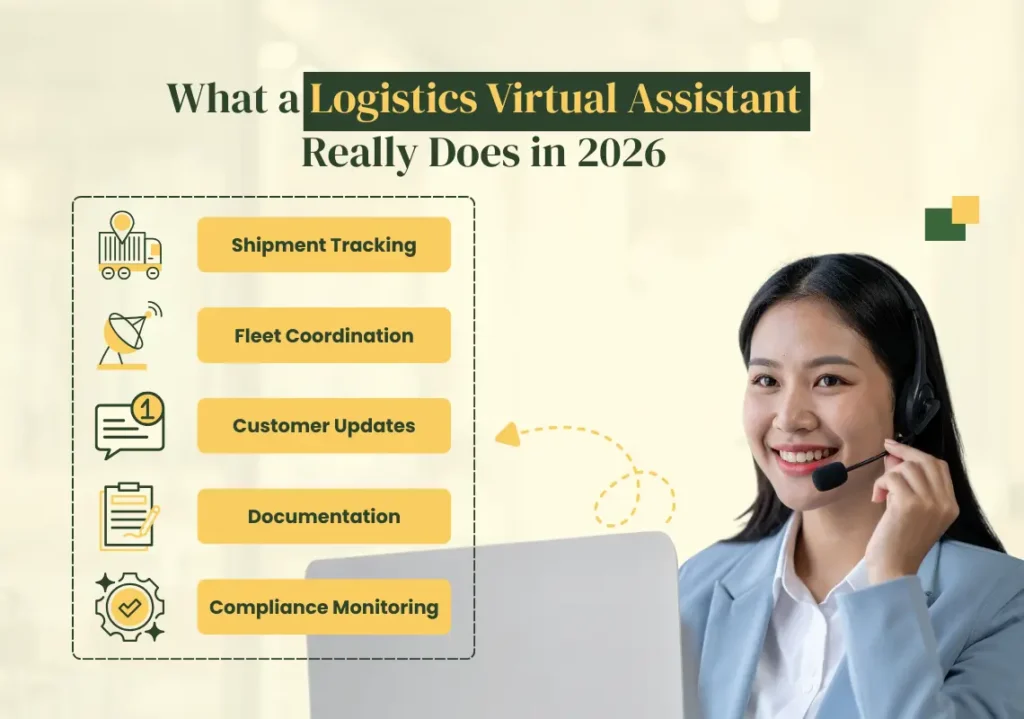
A modern logistics virtual assistant is not a generic VA handling random admin tasks. This role is operational by design and deeply embedded in day-to-day logistics workflows.
In practical terms, a logistics VA supports functions such as shipment tracking, fleet coordination, customer updates, documentation preparation, and compliance monitoring. They work inside your existing systems, whether that is a transport management system, spreadsheets, email platforms, or low-code automation tools.
At Teambuild Consultancy, we ensure that our virtual assistants are trained to handle logistics-specific responsibilities. This allows businesses to offload repetitive but critical work while maintaining accuracy and accountability.
Supporting Fleet and Driver Operations More Effectively
Driver shortages remain one of the most significant challenges in UK logistics. While a virtual assistant cannot replace a driver, they can dramatically improve the working experience for the drivers you already employ.
Logistics virtual assistants handle route updates, delivery confirmations, and dispatch coordination. They communicate with customers when delays occur and ensure that drivers are not burdened with constant phone calls and paperwork. This reduces stress for drivers and allows them to focus on their core responsibility of delivering goods safely and on time.
Virtual assistants also help monitor compliance issues, such as vehicle documentation and zone restrictions. In cities like London, managing requirements related to ULEZ and congestion zones is critical to avoiding unnecessary fines. A dedicated VA can check compliance daily and flag risks before they become costly mistakes.
Reducing the Administrative Burden of PCNs and Fines
Penalty Charge Notices are a persistent issue for logistics companies operating in urban areas. Parking violations, bus lane infringements, and loading zone disputes can quickly add up, both financially and administratively.
A logistics virtual assistant can take ownership of the entire PCN process. This includes logging fines, gathering delivery evidence, preparing appeal documentation, and submitting cases to local councils or tribunals. By systemising this work, businesses recover time and reduce the likelihood of missed deadlines or poorly prepared appeals.
Over time, this structured approach not only saves money but also creates better visibility into recurring problem areas, enabling managers to adjust routes or delivery practices proactively.
Managing Post-Brexit Documentation and Compliance
Brexit has permanently changed how goods move in and out of the UK. Documentation errors that were once minor inconveniences can now result in shipments being delayed for days or even weeks. With further changes coming under frameworks such as ICS2 and the Border Target Operating Model, data accuracy has become non-negotiable.
Logistics virtual assistants play a key role in maintaining documentation quality. They prepare commercial invoices, customs paperwork, certificates of origin, and safety declarations with a high level of attention to detail. They also track regulatory updates and ensure that processes evolve alongside new requirements.
For businesses moving goods between Great Britain and Northern Ireland, upcoming safety and security declaration requirements in 2026 will require dedicated focus. A virtual assistant provides that focus without adding pressure to already stretched in-house teams.
The Cost Advantage of Virtual Assistants
One of the strongest reasons UK logistics companies adopt virtual assistants is cost predictability. Hiring a full-time logistics coordinator locally can cost upwards of £35,000 per year once salary, National Insurance, pensions, recruitment fees, and office overheads are included.
Teambuild Consultancy offers a simpler pricing model designed for flexibility:
- Part-time virtual assistant: approximately £500 per month (4 hours per day)
- Full-time virtual assistant: approximately £900 per month (8 hours per day)
This model allows businesses to scale support based on workload rather than fixed staffing assumptions. It also removes the risks associated with long recruitment cycles and employee turnover.
Why the Philippines Is a Strong Talent Market for Logistics VAs
Our virtual assistants are based in the Philippines, a country well known for its strong English proficiency and compatibility with UK business culture. Many professionals in the Philippines have experience working with international logistics, e-commerce, and supply chain operations.
At Teambuild Consultancy, we focus on matching candidates to logistics-specific roles rather than offering generalist support. This ensures that our clients receive virtual assistants who understand operational urgency, compliance requirements, and professional communication standards.
We handle recruitment, onboarding support, and ongoing performance monitoring so that clients can focus on outcomes rather than people management.
Automation and Process Improvement for SMEs
Small and medium-sized logistics businesses often know what they want to automate but lack the time or technical resources to do it. Low-code tools such as Zapier and n8n have made automation more accessible, but they still require setup and maintenance.
A logistics virtual assistant can bridge this gap. They can build and manage workflows that automate invoice processing, shipment alerts, customer notifications, and internal reporting. When combined with basic AI tools, these workflows reduce errors and speed up response times without heavy IT investment.
For SMEs, this approach delivers many of the benefits of automation without the cost and complexity of custom software development.
Human Judgment Still Matters in Logistics
Despite advances in automation and AI, logistics remains a human-driven industry. Unexpected delays, damaged goods, and frustrated customers require empathy and judgment, not scripted responses.
This is why the most effective logistics operations use a hybrid model. Digital tools handle data processing and alerts, while human virtual assistants manage relationships, exceptions, and decision-making. At Teambuild Consultancy, we design VA roles around this balance rather than treating automation as a replacement for people.
Choosing the Right Partner Among Virtual Assistant Companies
Not all virtual assistant companies understand logistics. Industry knowledge, data sensitivity, and operational discipline matter when outsourcing critical functions.
When choosing a partner, businesses should look for logistics experience, transparent pricing, and ongoing support. Hiring a virtual assistant is not just about filling a role but about integrating a new function into your supply chain.
Teambuild Consultancy focuses on long-term partnerships. We support our clients beyond hiring, ensuring that virtual assistants remain aligned with business goals and operational standards.
Final Thoughts
The logistics landscape in 2026 will reward companies that move quickly and operate efficiently. Those that rely solely on traditional staffing models will struggle to keep up with rising costs and complexity.
A logistics virtual assistant offers a practical and scalable solution. It allows businesses to strengthen operations, improve compliance, and support their teams without increasing overheads.
Whether you need part-time support for documentation and PCNs or full-time assistance managing fleet coordination and customer communication, Teambuild Consultancy helps make the transition simple and effective. Now is the time to build smarter logistics operations for the years ahead.